Published : 2025-11-28
Ubiquitous in China, tofu is one of the oldest foods still in existence, with a history of around 2,000 years. It holds a significant place in Chinese culinary culture.
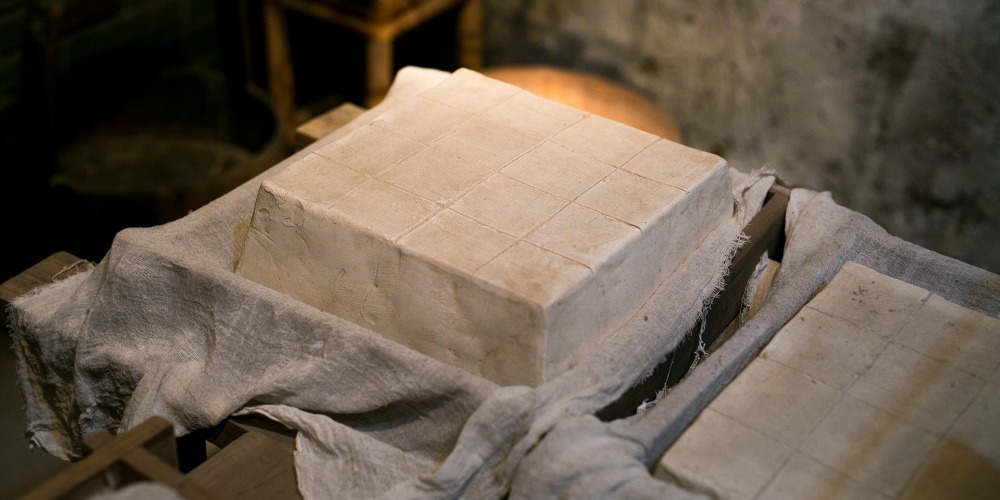
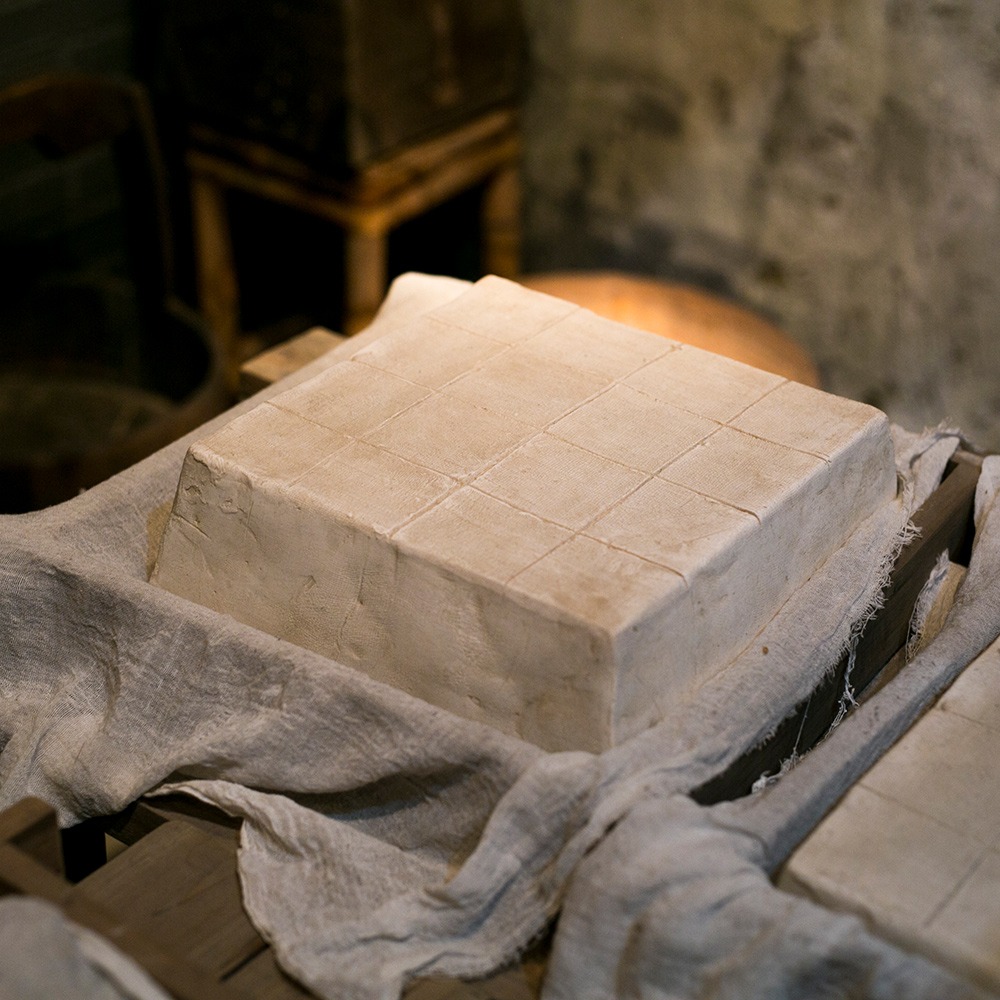
From snowy-white varieties to those that appear "dirty" or smell "pungent", tofu comes in many forms across different regions and ethnic groups.
These unique varieties reflect local traditions, and their crafting techniques are recognised as intangible cultural heritage—more than just food, they are a piece of living culture.
The birthplace of tofu
Huainan tofu (淮南豆腐) from Huainan City, Anhui Province, is hailed as "the forefather of tofu".
Legend has it that Liu An, the King of Huainan during the Han Dynasty, accidentally invented Huainan tofu while practising alchemy.
The production method later spread among the common people and has since been passed down through generations for over 2,000 years.
Compendium of Materia Medica, written by the Ming dynasty pharmacologist Li Shizhen, recorded that the method for making tofu originated with Liu An, the Prince of Huainan in the Han Dynasty.
The text also outlines the basic preparation: soaking and grinding beans into soya milk, straining out the solids, and bringing it to a boil.
A coagulant—such as gypsum, bittern, the leaves of Symphocos sumuntia (a type of Chinese medicine), fermented whey, or vinegar starch—is then added to solidify the soya milk into tofu.
The soaking time of the soya beans, the heat control when boiling the milk, and the speed of "setting the tofu"—every step will affect the texture and colour of the tofu.
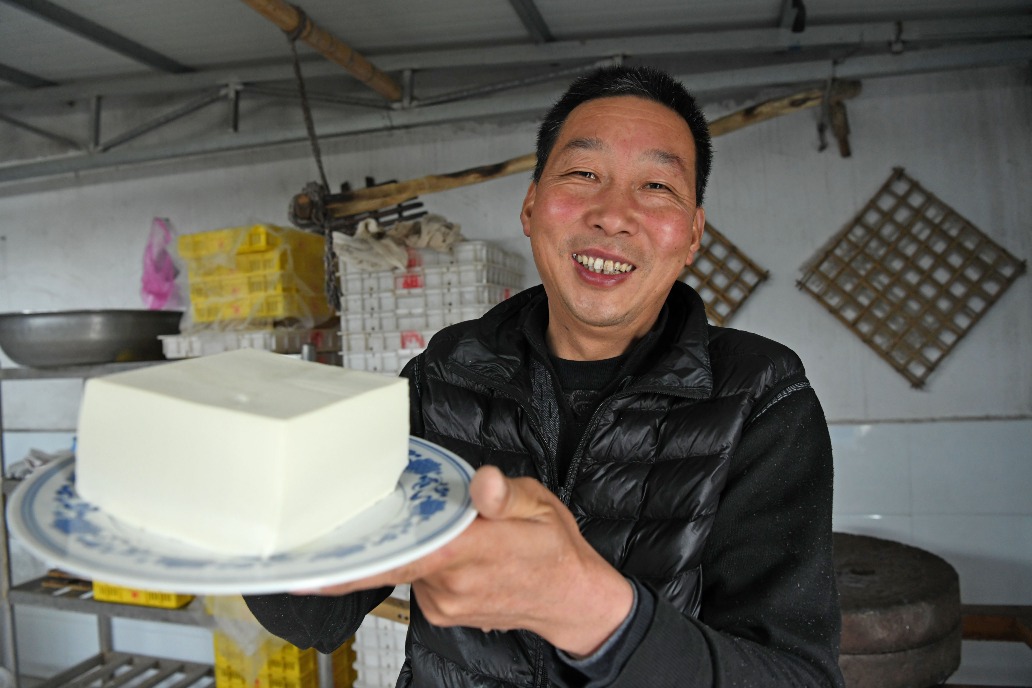
Bagong tofu (八公豆腐) is representative of Huainan tofu. The production techniques, passed down for a thousand years, have resulted in Huainan tofu that is fine in texture and as white as jade.
When held in the hand and shaken, it does not fall apart; when boiled in soup for a long time, it neither sinks to the bottom nor breaks up, which is rather magical.
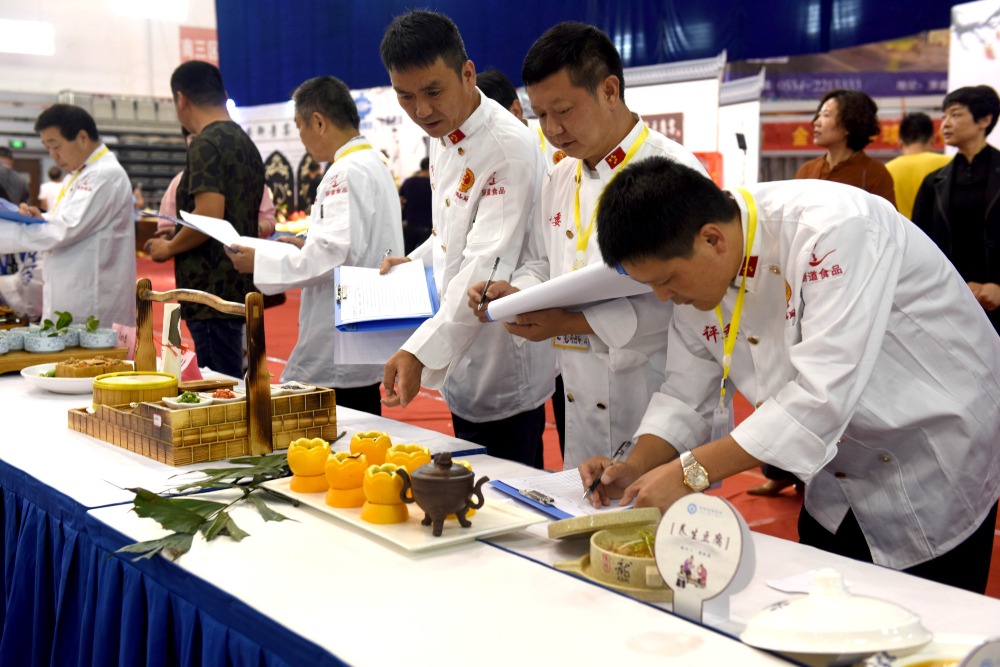
In 2014, Huainan tofu was listed as a national-level intangible cultural heritage as part of the "Traditional Tofu Making Techniques". Huainan City became China's only national-level protected area for traditional tofu making techniques.
With the development of the times, the production of Huainan tofu has also been constantly upgraded.
While inheriting the traditional techniques, tofu production has gradually undergone modernisation, mechanisation and specialisation.
The inheritors of Huainan tofu have also developed more different types of tofu products, with up to 400 varieties of tofu dishes.
In recent years, the locality has also held the Tofu Culture Festival on multiple occasions, and tofu has become one of Huainan's pillar industries.
Can tofu be made from ginger?
The methods for making tofu differ across China; in Jiangxi, ginger can also be used to make tofu.
The technique for making yellow ginger tofu is an intangible cultural heritage of Chongyi County, Jiangxi Province, and it has been passed down for more than 300 years.
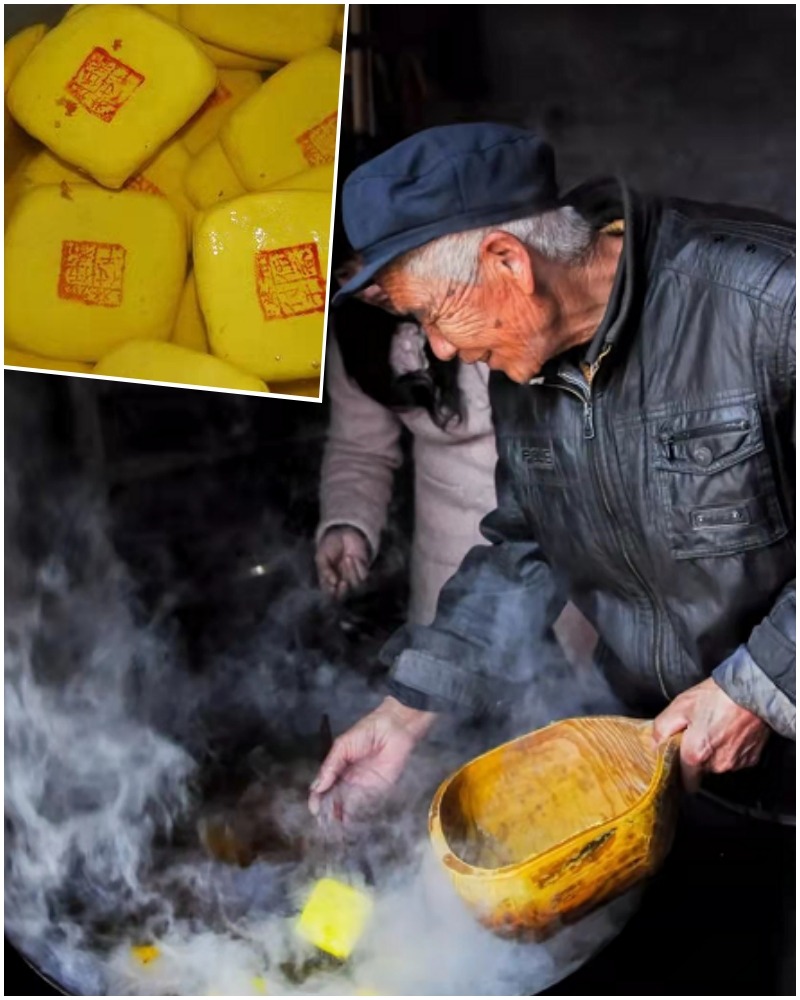
This tofu is made from local soya beans, mountain spring water, and wild turmeric. When coagulating the tofu, instead of using gypsum, fermented whey is used, which is healthier and has a better texture.
When pressing the tofu, traditional moulds are not used; instead, small square cloths are used to wrap the tofu into individual blocks for pressing. After the tofu is pressed, it is then boiled in turmeric water to colour it.
The finished tofu is golden yellow, fragrant, smooth, and delicate, and is deeply loved by local residents and tourists.
As it contains warming and nourishing wild turmeric, it is also suitable for women to eat during their postpartum confinement period.
Fragrant or smelly? Huogongdian's stinky tofu
Stinky tofu, infamous for its pungent aroma yet delightful taste, has now been recognised as an intangible cultural heritage.
Originating in Changsha, Hunan during the Daoguang era of the Qing Dynasty, it is renowned nationwide for being "jet-black in colour, mellow in fragrance, tender in texture, and velvety smooth."
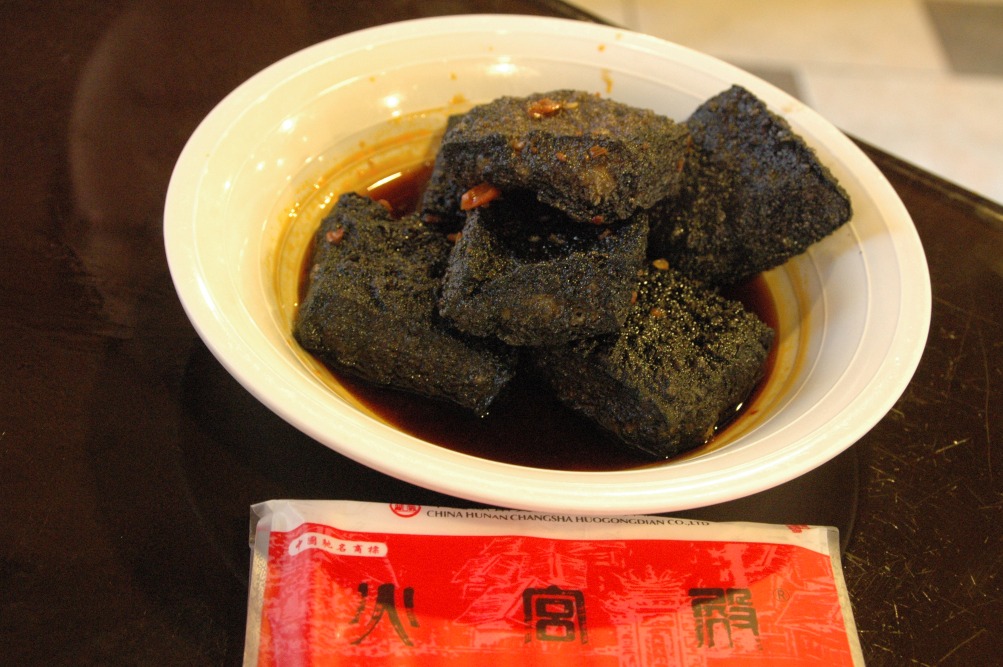
Huogongdian's stinky tofu (火宮殿臭豆腐) is regarded as the hallmark of Changsha's variety. It continues to use traditional recipes and techniques, with its crafting method recognised as a national-level intangible cultural heritage.
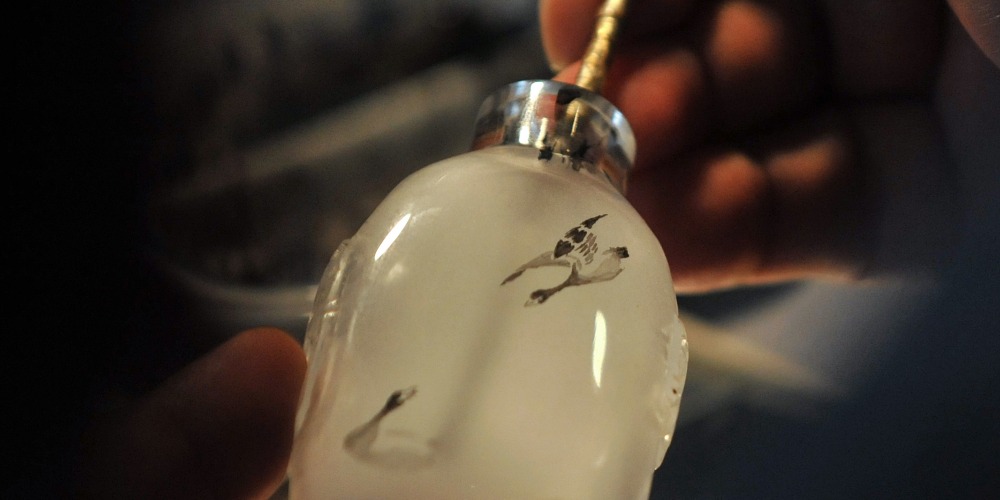
Read more: A world within snuff bottle: The art of Chinese inside painting
In recent years, He Guliang, the third-generation inheritor of the Huogongdian's stinky tofu production technique, has continued to improve the production method.
While maintaining the tradition, he has introduced advanced production technology and developed vacuum-packed stinky tofu products, extending the shelf life of stinky tofu to 12 months. It allows more people to taste this intangible cultural heritage delicacy.
"The dirtiest tofu" ash tofu?
In everyone's impression, tofu is always white and tender, but there is a unique way of making tofu in Guizhou where the resulting tofu is "greyish" and looks a bit dirty.
In fact, it is not only clean but also a local delicacy that has been passed down for hundreds of years.
This tofu is known as "ash tofu", involves some twenty steps in its making.
The process begins by cutting freshly made tofu into small cubes, which are then evenly coated in alkali-rich plant ash and left to rest for several hours.
This allows the alkali to react with the surface proteins of the tofu, fortifying the exterior while firming the interior.
Then the cubes are stir-fried in more plant ash, which causes the inside to become light and springy.
The plant ash, being a natural material, is harmless. Once the coating is rinsed off, the tofu is ready to eat — simply tossed with seasonings, it makes a delightful cold dish.
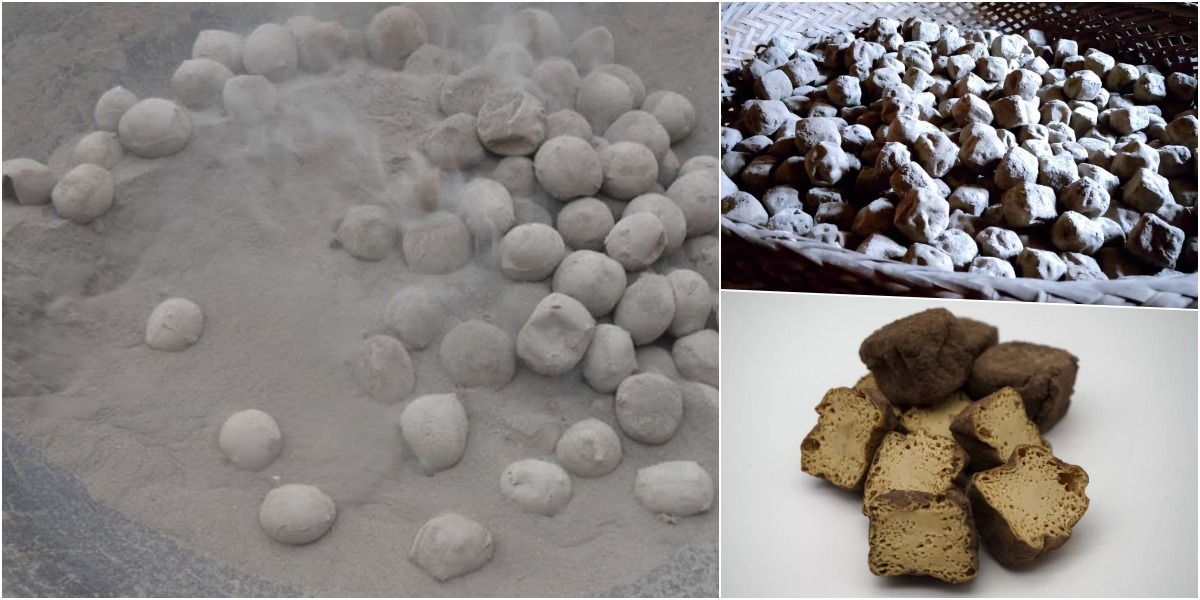
It is said that the method was initially developed in Guizhou as a way to preserve tofu.
Today, the craft of making ash tofu has been recognised as intangible cultural heritage in several localities.
In 2012, the Daozhen method (道真灰豆腐製作技藝) was listed as a county-level heritage, followed by the Pengshui technique (彭水灰豆腐製作技藝) at the municipal level in 2017.
This simple block of tofu embodies the ingenuity of past generations. The variety of dishes created from it is immense.